


 This page is regularly updated, please select here to view the latest version.
Noticing Nature at the Rec - March 2026
OOPS-A-DAISY
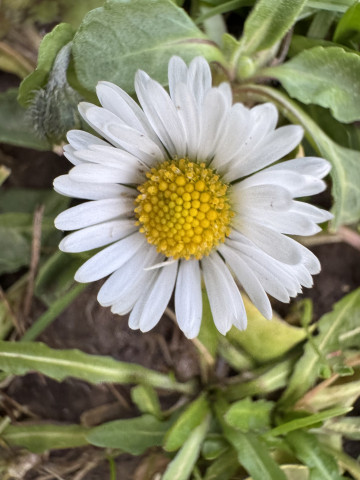
The Common Daisy (Bellis perennis) has got to be one of our most ubiquitous and well recognised wildflowers. They certainly appear in profusion at the Rec, most especially in the grassy areas of the garden. Sadly, we tend to overlook the everyday, familiar things; only missing them once they've gone. But the humble daisy is well worth our attention and very much a part of our culture. Many of us will have childhood memories of making daisy chains or plucking off the 'petals' to discover whether a love interest: "Loves me, or loves me not". The daisy also features in a number of everyday expressions such as "Pushing up the daisies" or "Fresh as a daisy". And not to forget the good old "Daisy Roots", the Cockney rhyming slang for boots
This little plant's beauty is reflected in its Latin name Bellis, and the common name is thought to originate from the Old English daegeseage which means "day's eye". It refers to the fact that the daisy spreads itself open at dawn and closes at dusk. There's hardly a time throughout the year when daisies aren't in flower somewhere, hence the second part of its Latin name, perennis, which translates as everlasting. However, the main flowering season is during the spring and summer, when their cheery presence brightens up many a lawn, field or roadside verge
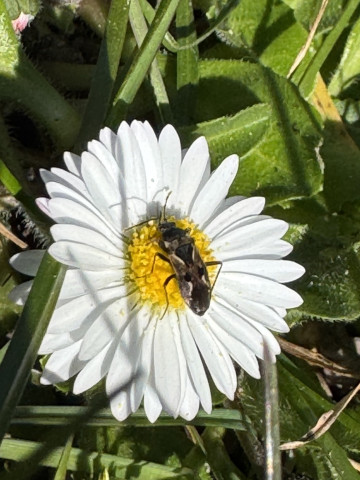
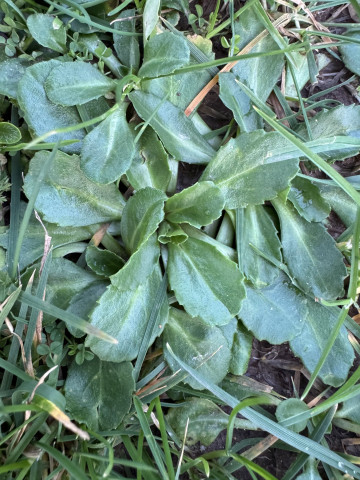
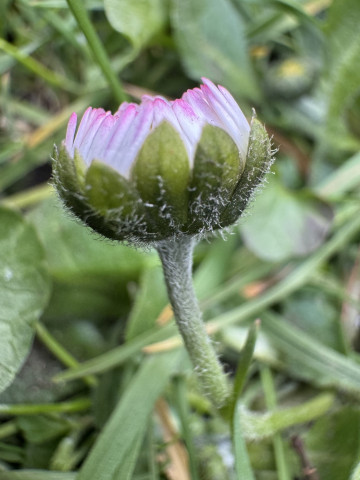
Although, the humble daisy isn't all that it seems. What appears to us as a single flower with a yellow centre and white petals is in fact a number of individual flowers. The tiny yellow flowers that make up the centre are called disc florets and each has 5 short pointed petals. These have both male reproductive parts, producing pollen, and female parts that give rise to the seeds. The white florets that encircle them are called ray florets, or ligules. These contain only female parts and can produce seeds, if fertilised, but their main function is to attract insects. Supporting the composite flower head from below, are a series of green bracts which contain an enlarged internal receptacle that holds all the flowers in place. The leaves form a basal rosette, keeping close to the ground. They are dark green, spoon shaped and with slightly wavy edges. The stem grows from about 5 to 15cms tall, each one supporting one composite flower head. Both the leaves and stem are slightly hairy
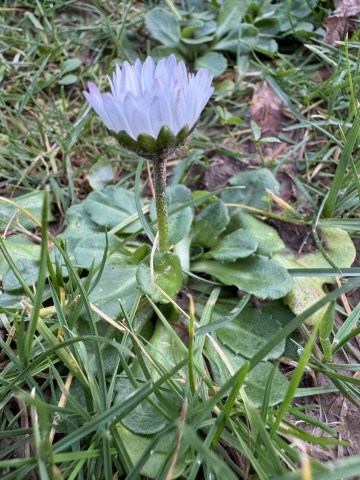
Daisies spread either by seed, or by putting out new roots. Each floret produces one seed, which measures about 1mm and is contained within a dry fruit called an achene. The seeds are spread by insects, other animals, and the wind. They will grow in a variety of environments and are no strangers to the garden lawn. The daisy family, Asteraceae, forms 10% of all flowering species and they are found on every continent except Antarctica.
The leaves and flower of the Common Daisy are apparently edible, although I can't speak from personal experience. They are rich in Vitamin C and active plant chemicals, which also gives them healing properties. Apparently, Henry VIII ate daisies to cure his stomach ulcers.....although a more moderate diet might have been a better solution! Daisies are also steeped in symbolism signifying innocence, purity, renewal and many other things according to different times and cultures. In Celtic mythology, they were thought to represent the spirits of deceased babies, and they are associated with childbirth and fertility as the flower of the Norse goddess, Freya.
And of course, they are of ecological importance as a source of nectar and pollen to bees, flies and other insects. They are also eaten by a number of herbivores, and play a role in maintaining soil health and stability. Given that, and their beautiful, cheerful appearance, what's not to like? So put away the herbicides and lawn improvers and give space to this wonderful little plant.
And who could express appreciation for this small native gem, better than the 18th century nature poet, John Clare:
"Sweet Daisy! full of quietness and love,
White as a star, and fresh as morning dew,
Thy humble beauty doth my heart approve,
And in thy presence, all my cares subdue."
Words & photos: Denise Long


Friends of Portswood Rec, Southampton, UK